

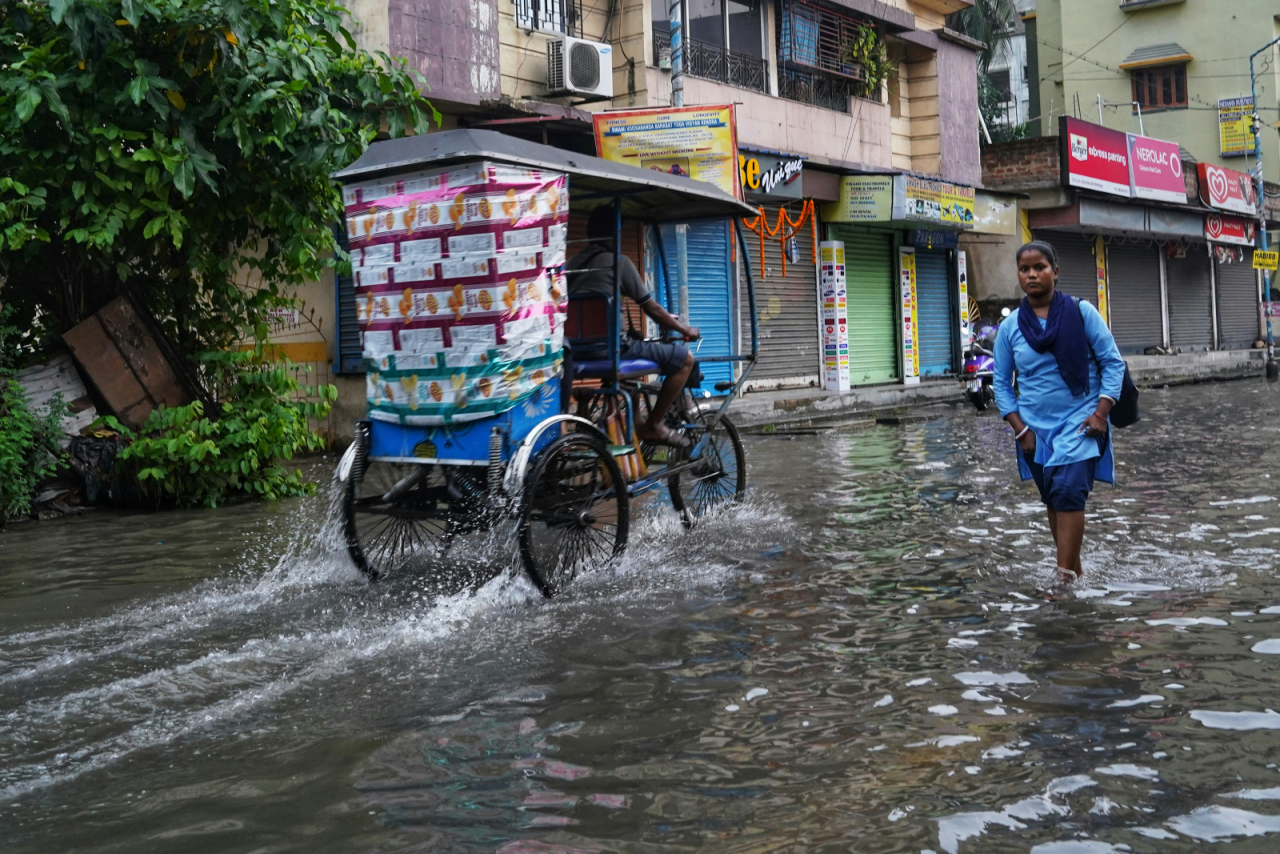
Climate change is not experienced equally, particularly in cities. Your identity, including your gender, age, income level, disability or sexual orientation, determines how you are affected by climate impacts and whether you can access the infrastructure and services that build resilience. Yet, too often, urban climate projects are designed with a “neutral” user in mind, one who reflects neither the diversity of residents nor their lived experiences.
Building on its Gender Equality, Disability and Social Inclusion (GEDSI) Strategy, the Urban-Act project demonstrates how inclusion can be integrated into the very fabric of climate action. Rooted in intersectionality and anchored in practical tools, Urban-Act’s GEDSI strategy seeks to shift power dynamics and create space for meaningful representation in all interventions, through the “4R Method”:
Representation (Who) – Who are the users of urban infrastructure and services? How do gender, age, disability, or income shape their needs and experiences?
Resources (What) – What resources are available, and how are they distributed? Are allocations reinforcing or challenging patterns of exclusion?
Reality (Why) – What are the everyday living conditions and power dynamics of different groups? How do they shape vulnerability and response to climate risks?
Rights (Why Not) – What laws and regulations govern access to infrastructure or services? Do they enable equality or maintain barriers?
Answers to the “4R” questions have to come from the people with lived experiences, but who holds the power to decide what issues are put on the table for consultation in the first place?
Learning from practice
In August 2025, Urban-Act hosted two workshops, exploring how GEDSI principles can strengthen inclusive design in practice and how GEDSI can be integrated into project planning.
Through exchanges with experts and city representatives, it became clear that inclusive climate planning goes beyond representation in consultations. It requires actively redesigning systems and services to meet the needs of different groups, particularly those whose voices are rarely heard, as exemplified by:
Hat Yai, Thailand, looked at how waste segregation could be incentivised through an integrated resource recovery centre, reshaping the way households engage with waste and accounting for community members who are most likely to be involved.
Panajai, India, piloted hybrid nature-based solutions to stormwater management, improving traditional infrastructure with ecological and inclusive approaches.
Pandang City, Indonesia, explored how public spaces could be adapted into elderly-friendly and disability-inclusive areas, reflecting the reality of demographic evolution.
The lesson emerging is clear: resilience is not only about infrastructure or finance, but also about people, and people are never homogenous.
Shifting power dynamics
Globally, less than five per cent of leadership roles in the built environment are held by women. Architecture professionals remain overwhelmingly white, male, able-bodied and childless. This means that those who design cities often operate at a distance from the realities of caregiving, mobility constraints, or marginalisation.
Accessibility and reasonable accommodations also matter for meaningful participation, and yet, remain underdeveloped in most countries in Asia and the Pacific. Inclusion has to be built into the technical and political institutions that make decisions and not bolted on at the end through tokenistic consultation.
Recognising diversity within groups is also important. Differences in class, education, ethnicity, disability or sexual orientation mean that some voices are louder than others. True GEDSI work requires finding, hearing and amplifying those who are most marginalised.
Finance: A social and political question
Embedding GEDSI principles into design is an essential first step, but design alone is not enough. Financing determines which projects move from plans on paper to reality on the ground. Too often, this is where inclusive ambitions can falter. Even the most thoughtfully designed projects will not deliver if the financial systems behind them prioritise profit over people or bankability over equity.
Looking at climate finance through a GEDSI lens is just as important as rethinking design. Climate finance is often treated as a technical domain and is therefore seen as difficult to “mainstream” inclusion into. Yet finance is never neutral. It is deeply social and political, determining which projects move forward, who benefits and who is left behind.
Mitigation finance is dominated by loans, privileging projects that can demonstrate financial returns. This “bankability” filter risks sidelining equity concerns, as affordability, accessibility or safety do not easily show up on a balance sheet. Adaptation finance, on the other hand, is often grant-based, lending itself more naturally to inclusion. Grants fund interventions that may not generate financial returns but produce social benefits such as improved health, safety and reduced care burdens.
Across all forms of finance, policymakers have a vital role to play. Regulations can require universal access, gender impact assessments or disability inclusion in projects. Cities can proactively develop inclusive project pipelines and put them to market. And financial instruments can be tailored, with concessional capital or guarantees, to de-risk socially inclusive projects that may otherwise be overlooked.
Towards more liveable cities
Climate change may not discriminate, but our systems often do. Designing and financing cities with GEDSI in mind is not about political correctness or ticking boxes. It is about creating equitable, liveable and resilient cities for everyone.

